
Mechanical flow meters have been the backbone of industrial measurement for decades. But as technology advances, facilities are moving away from manually checking dials and moving toward total automation. The key to this transition? The Sensor Flow Meter.
If you want to modernize your fluid transfer system, understanding how these smart devices work is the perfect place to start.
What is a Sensor Flow Meter?
Think of a traditional flow meter like a classic mechanical watch—it keeps great time, but you have to physically look at it to know what time it is. A Sensor Flow Meter, on the other hand, is like a smartwatch. It doesn’t just measure the flow; it digitizes the information and sends it wherever you need it to go.
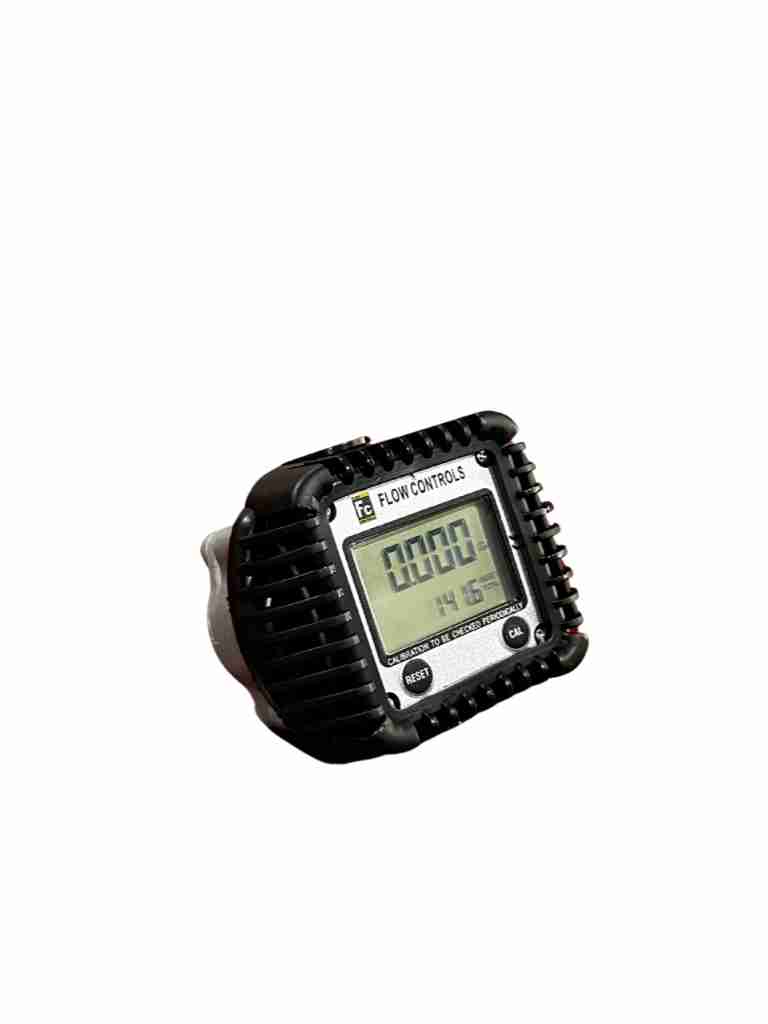
In simple terms, it is a flow meter equipped with an electronic sensor (often called a pulse transmitter or transducer). This sensor detects the physical movement of the fluid—or the movement of the meter’s internal gears—and translates it into an electrical signal.
How Does It Actually Work?
While the core mechanics depend on the type of meter, the addition of a sensor generally follows a straightforward process:
- Movement Detection: As liquid flows through the pipe, it turns internal components (like the oval gears or rotary vanes in a Positive Displacement meter).
- Signal Generation: The sensor, mounted on or inside the meter body, detects each rotation. Every time a gear completes a full turn, the sensor generates an electrical “pulse.”
- Data Transmission: These pulses are sent through wires to a digital display, a computer network, or a control panel.
- Translation: The computer calculates that 1 pulse equals a specific volume (for example, 0.1 liters). If the sensor sends 100 pulses in a minute, the system knows exactly how fast and how much liquid is flowing.
Why Your Operation Needs a Sensor Flow Meter
Upgrading to a digital, sensor-based system is about efficiency and control. Here is why modern industries are making the switch:
- Remote Monitoring: You no longer need an employee walking the floor with a clipboard. You can monitor flow rates, total volumes, and system alerts from a control room or even a smartphone app.
- Automated Batching: If you need to fill a tank with exactly 5,000 liters of fuel, a sensor flow meter can be wired to an automatic valve. Once the sensor counts 5,000 liters, it instantly tells the valve to shut off—no human intervention required.
- Data Integration: Digital sensors make it easy to log data directly into your accounting or inventory software, ensuring seamless and error-free record-keeping.
Building a Smart System with fcmeter.com
A sensor is only as good as the system supporting it. At fcmeter.com, backed by the industrial authority of PT Ferindo Energi Instrumen, we provide the complete hardware ecosystem required for highly accurate, automated fluid management.
1. High-Accuracy Meters with Pulse Output
To get accurate digital readings, you need precise mechanical movement. Our FCO Series (Oval Gear) and FCM Series meters can be equipped with high-resolution pulse transmitters. This gives you the legendary mechanical accuracy of a positive displacement meter combined with state-of-the-art digital tracking.
2. Automated Control Valves
A Sensor Flow Meter tells you what is happening, but a valve controls it. By pairing your sensor-equipped meter with our industrial-grade solenoid valves, you can create fully automated batching and loading systems that open and close based on real-time data.
3. Fully Integrated Fuel Dispensers
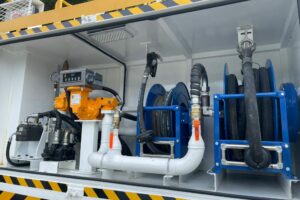
If you need a complete, ready-to-use solution, our commercial Fuel Dispensers feature internal sensor flow meters wired directly to secure, digital preset controllers. They act as automated, high-security gas stations for your private fleet.
4. Essential Protection: Strainers
Sensors and high-precision gears are sensitive to damage. Installing one of our heavy-duty Strainers upstream of your meter is absolutely mandatory. It catches rust, pipe scale, and debris before it can ruin your meter’s internal components or disrupt the sensor’s readings.