
Diesel is the lifeblood of heavy industry, agriculture, and global transportation. Whether you are fueling a fleet of delivery trucks, running heavy construction equipment, or managing backup generators for a hospital, diesel represents a massive operating expense.
To protect your bottom line and prevent costly fuel loss, you need a reliable Diesel Flow Meter. Here is a simple, straightforward guide to understanding how these devices work and how to choose the right one for your facility.
What is a Diesel Flow Meter?
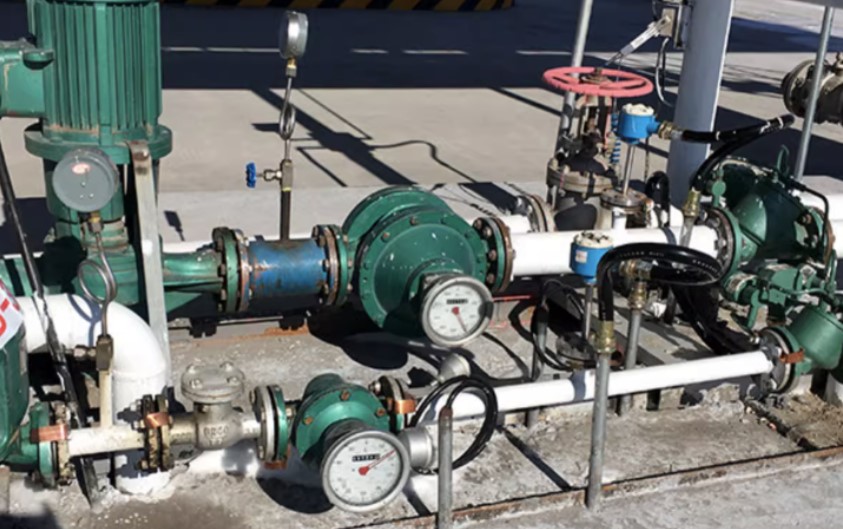
A Diesel Flow Meter is a specialized mechanical or digital instrument installed directly into your fuel transfer line. Its job is simple: accurately measure and record the exact volume of diesel fuel passing through the pipe.
Think of it like a highly advanced toll booth on a highway. Instead of counting cars, it counts specific “buckets” of fuel. By keeping a precise tally, the meter tells you exactly how fast the fuel is moving (flow rate) and how much total fuel has been dispensed (total volume).
Why Diesel Needs Specialized Measurement
You cannot use just any water meter to measure diesel. Diesel has unique physical properties that require specialized equipment:
- Viscosity: Diesel is “thicker” (more viscous) than water or gasoline, and its thickness changes depending on the temperature. A good meter must maintain accuracy even as the fuel gets thicker in cold weather.
- Lubricity: Diesel acts as a natural lubricant. This is actually a major benefit, as it constantly lubricates the internal moving parts of the meter, ensuring a long operational life.
- High Value: Because diesel is expensive and easily stolen, the meter used to track it must be incredibly precise and tamper-proof.
How a Diesel Flow Meter Works
For diesel applications, the most trusted technology is the Positive Displacement (PD) meter.
Instead of guessing the flow based on how fast the liquid is moving, a PD meter physically captures the diesel. Inside the meter, the flowing fuel pushes against precision-machined gears or vanes. The meter divides the fuel into exact, fixed volumes. Every time the internal gears make a full rotation, a specific amount of diesel has passed through.
By simply counting those rotations—either mechanically with clicking dials or electronically with a digital sensor—the meter provides an incredibly accurate reading.
Top Diesel Tracking Solutions for Your Operation
At fcmeter.com, supported by the engineering expertise of PT Ferindo Energi Instrumen, we provide tailored diesel measurement systems built for heavy-duty industrial use.
High-Accuracy Meters (FCM & FCO Series)
Because diesel is naturally viscous, our Positive Displacement meters are the ultimate choice. The thicker the fluid, the better these meters perform.
- The fcmeter.com Solution: Our FCM Series (Rotary Vane) and FCO Series (Oval Gear) flow meters offer an outstanding accuracy of up to ±0.2%. Whether you choose a classic mechanical register or a modern digital display, these meters are the gold standard for diesel custody transfer.
Complete Fuel Dispensers
If you are operating a private fleet, a standalone Diesel Flow Meter is only one piece of the puzzle. You need a safe, secure way for your drivers to pump the fuel.
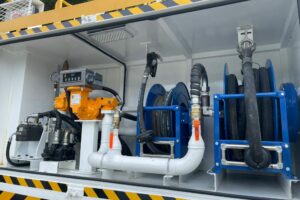
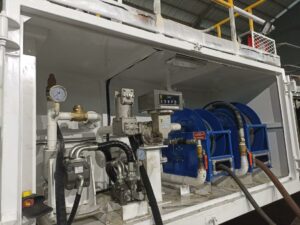
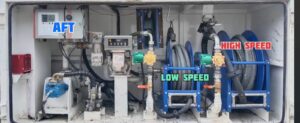
- The fcmeter.com Solution: We supply complete, commercial-grade Fuel Dispensers. These units combine our high-accuracy meters with heavy-duty pumps, hoses, and digital preset keypads, giving your private yard the convenience and security of a modern gas station.
Crucial Protection: Strainers and Air Eliminators
A flow meter is a precision investment that needs protection from the realities of fuel storage.
- The fcmeter.com Solution: Old diesel tanks accumulate rust, sludge, and debris. Installing one of our heavy-duty Strainers upstream of your meter catches this debris before it can jam the internal gears. Furthermore, pairing your system with an Air Eliminator ensures your meter only measures pure diesel—not empty air pockets—saving you from inaccurate readings.