
Whether you are managing a fleet of delivery trucks, running an agricultural operation, or overseeing a massive industrial facility, fuel is one of your biggest expenses. Tracking exactly where every drop goes isn’t just good practice; it is essential for your bottom line.
That is exactly where a Fuel Flow Meter comes in.
But what exactly is it, and how do you choose the right one for your operation? Here is a straightforward guide to understanding and selecting the best fuel measurement tools on the market.
What is a Fuel Flow Meter?
Think of a Fuel Flow Meter like the odometer in your car, but instead of measuring miles driven, it measures the exact volume of liquid passing through a pipe. It is a specialized mechanical or digital device installed directly into your fuel transfer line.
As diesel, gasoline, kerosene, or heavy oils pump through the system, the meter calculates the flow rate (how fast the fuel is moving) and the total volume (how much fuel has been dispensed).
Why Accurate Fuel Measurement Matters
Using a high-quality Fuel Flow Meter is about taking control of your resources. Here is why industries refuse to operate without them:
- Preventing Loss and Theft: When you can account for every liter of fuel dispensed, discrepancies vanish. You know exactly how much went into a vehicle versus how much left the storage tank.
- Cost Efficiency: “Custody transfer” is a term used when fuel changes hands and money is exchanged based on volume. Even a 1% error in a high-volume transfer can cost thousands of dollars over a year. A precision meter stops you from overpaying or under-billing.
- Equipment Maintenance: Monitoring the flow rate can alert you to pump issues or line blockages before they cause expensive equipment failures.
Top Solutions for Fuel Measurement
Different operations require different setups. At fcmeter.com, backed by the industrial expertise of PT Ferindo Energi Instrumen, we provide tailored solutions for every scenario.
1. Positive Displacement Meters for Maximum Precision
When you are moving high-value or highly viscous fuels like heavy oils, accuracy is everything. Positive Displacement (PD) meters work by trapping a precise “bucket” of fuel in internal chambers and counting how many times those chambers empty and fill.
- Our Top Pick: The FCM and FCO Series meters deliver an incredible accuracy of up to ±0.2%. They are the gold standard for custody transfer and heavily refined fuels.
2. Complete Fuel Dispenser Systems
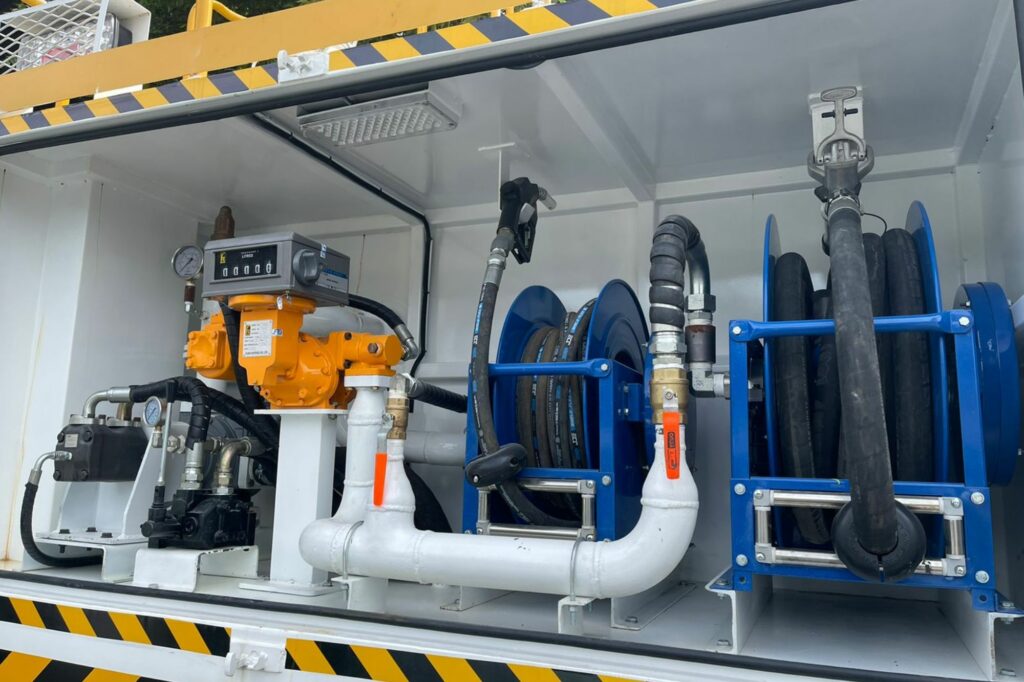
Sometimes a standalone Fuel Flow Meter isn’t enough; you need an all-in-one station to pump, measure, and control the fuel securely.
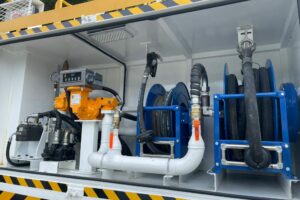
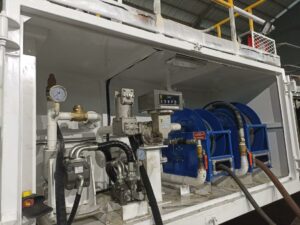
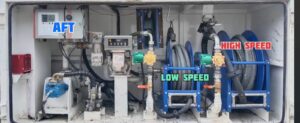
- Our Top Pick: We offer complete Fuel Dispensers that integrate our highly accurate flow meters with heavy-duty pumps, hoses, and digital preset controllers. These are perfect for private fleet refueling stations where you need a commercial-grade “gas station” experience on your own property.
Essential Accessories: Protecting Your Investment
A flow meter is a precision instrument. To keep it functioning flawlessly for years, you need the right supporting cast in your pipeline.
Strainers
Debris is the enemy of any mechanical meter. Even a tiny flake of rust from an old fuel tank can jam the gears. Installing one of our heavy-duty Strainers upstream of your meter catches these particles before they cause damage.
Air Eliminators and Valves
If air pockets get pushed through your pipeline, the meter will count that air as fuel—meaning you are paying for empty space! Pairing your meter with a high-quality mechanical air eliminator and our reliable industrial Valves ensures that only pure liquid is measured and that flow can be instantly shut off when the exact volume is reached.
Choosing the Right Partner
Selecting the right Fuel Flow Meter shouldn’t be a guessing game. By sourcing your equipment through fcmeter.com, you are partnering with the proven track record of PT Ferindo Energi Instrumen. You get access to time-tested equipment, expert sizing advice, and the exact valves, strainers, and dispensers needed to complete your system.